


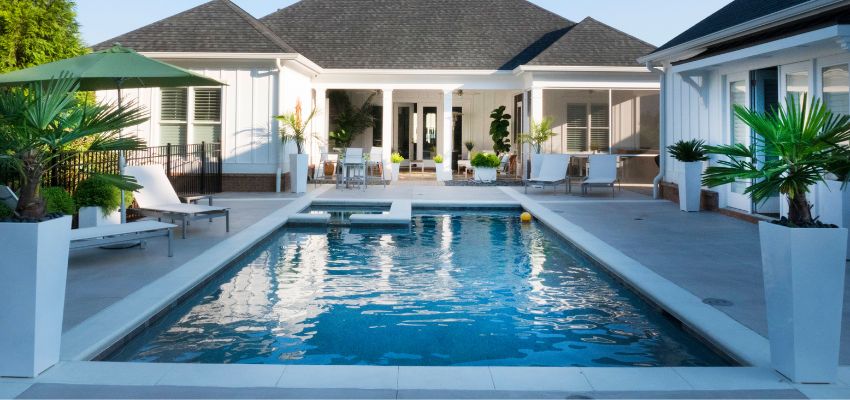
As part of your decision to add a swimming pool to your home, one of the key decisions will be choosing an appropriate size. Determining what constitutes an acceptable pool size depends heavily on factors like intended use, available space, budget constraints and personal preferences – this article will explore these considerations to help you select an ideal size.
1. Intended Use Sizing Recommendations A pool’s size will depend heavily upon its intended use, with some typical purposes and their corresponding size recommendations here:
Lap Swimming: For exercise and lap swimming purposes, a long and narrow pool will be necessary. A standard lap pool typically measures 40-50 feet long by 8-10 feet wide to enable uninterrupted swimming strokes.
Recreational Swimming: For general family fun, socializing and playing games, a medium-sized pool works perfectly. A good size for recreational swimming would be 16-20 feet wide by 32-40 feet long to give plenty of room for swimming, floating and playing without feeling cramped or restricted by space limitations.
Diving: To accommodate diving safely and effectively, the pool must be deeper – the deep end should measure at least eight feet deep – and longer in order to accommodate safe diving techniques. A good size for such an endeavor could be 20-30 feet wide by 40-50 feet long.
Pools on a Small Yard or Budget: Even those with limited space or budget can still find great joy in having a smaller pool. Plunge pools or cocktail pools typically measuring 10-14 feet wide by 20-28 feet long provide refreshing spots in compact spaces while offering an excellent way to cool off.
2. Available Space (Bottom Right Corner of Yard) Your yard plays an essential part in determining the pool size that’s appropriate for your family. Therefore, it’s essential that you accurately measure its available space while taking into consideration:
Proximity to Structures: Make sure there is adequate distance between your pool and any existing structures such as your house, garage or fence – local building codes may specify minimum distances necessary to provide safety and maintenance access for optimal performance of the pool.
Landscaping and Decking: Plan ahead for landscaping and deck areas surrounding your pool to create a comfortable and attractive pool environment. A good rule of thumb would be leaving at least six feet of decking around its perimeter.
Consideration of Sun Exposure and Shade: Keep the position of the pool relative to the sun in mind when selecting its placement. Maximizing sun exposure could increase warmth or placing it under cover may help alleviate overheated areas.
3. Budget Considerations
Your budget will have an immense influence on the size and complexity of your pool project. Larger pools require more materials, labor, and maintenance costs that could increase costs; here is an overview of how size impacts budget:
Construction Costs: The costs associated with pool construction increase depending on its size due to excavation, materials and labor expenses. Smaller pools may be more affordable while still providing luxurious experiences.
Maintenance Costs: Maintaining larger pools requires more chemicals, water, and energy than smaller ones, so take into account all long-term expenses that might come with keeping it clean, heated, and balanced.
Additional Features: When adding features like waterfalls, slides or intricate lighting to a pool, costs can quickly skyrocket. It is therefore vital that any desire for such features align with overall pool size in order to stay within budget.
4. Personal Preferences
Your preferences and lifestyle will ultimately dictate which pool size best suits your needs. Here are a few aspects to bear in mind when making this important decision:
Aesthetic Appeal: Your pool should complement both the architecture and landscape design of your home, adding visual interest and increasing aesthetic value of the entire property. A well-planned pool that fits well within its surroundings will enhance this aspect.
Future Needs: Consider how your needs may evolve over time. A pool designed for young children might become too small as your kids get older and begin swimming laps or diving – therefore planning ahead for future usage can help ensure you select a size which remains functional and enjoyable over time.
Entertaining Guests: For pool parties and entertaining guests regularly, having a larger pool that provides ample swimming and lounging space will prove ideal. Furthermore, having designated sections such as shallow wading areas for children and deeper sections for adults could prove even more advantageous.
5. Different Types and Their Dimensions of Pools
Different kinds of pools come in standard sizes that can help guide your decision:
Inground Pools: These customizable swimming pools come in all different shapes and sizes. Standard sizes range from small pools (10×20 feet) to larger (20×40 feet).
Above-Ground Pools: Above-ground pools tend to be more cost-effective and quicker to install, typically taking from 12 feet in diameter for round pools to 21×41 feet for oval. Standard sizes range from 12ft diameter round pools all the way up to 33 feet diameter for oval ones.
Plunge Pools: Created specifically for relaxation rather than swimming, these small pools typically measure from 6×12 to 10×20 feet in dimensions.
Infinity Pools: Famed for their spectacular visual effect, infinity pools may require additional space and investment than traditional swimming pools.
6. Regulations and Building Codes
Local regulations and building codes may have an impactful on your pool size decision, so it is imperative that you check with local authorities regarding compliance with zoning laws, safety requirements, or other relevant regulations that could apply to your property. Doing this early can save money in costly adjustments during construction as well as ensure it runs more smoothly overall.
Finding the ideal size of home swimming pool requires carefully considering various factors, including intended use, available space, budget and personal preferences. You should aim for balance when determining what pool size would best meet your needs and lifestyle – from lap pool for exercise and family fun, to recreational pool for family fun or compact plunge pool for relaxation – when selecting an appropriate size pool that will add value and joy for years. By considering all these aspects carefully when making this decision, creating something truly enjoyable will become part of your everyday routine and enhance home value while meeting needs and creating something wonderful that adds value while meeting needs and providing years of enjoyment from experience and planning ahead – creating something you will be proud to call home every day!
This post was written by a professional at Pool Stop Custom Pools. Pool Stop has been building custom swimming pools in the DFW area for over 20 years now. We have been consistently voted “Best custom pool builders in dallas tx” in Rockwall by Living Magazine and its readers year after year. Our goal is to provide the community with the best design and construction technology available. Our team consists of the best and most educated professionals in the industry, across the board. Pool Stop offers a variety of services: New Pool Design & Pool Construction, Retail Pool Store, Pool Supplies, Water Testing, and Pool Cleaner Repair. Stop by today for a FREE Water analysis.