

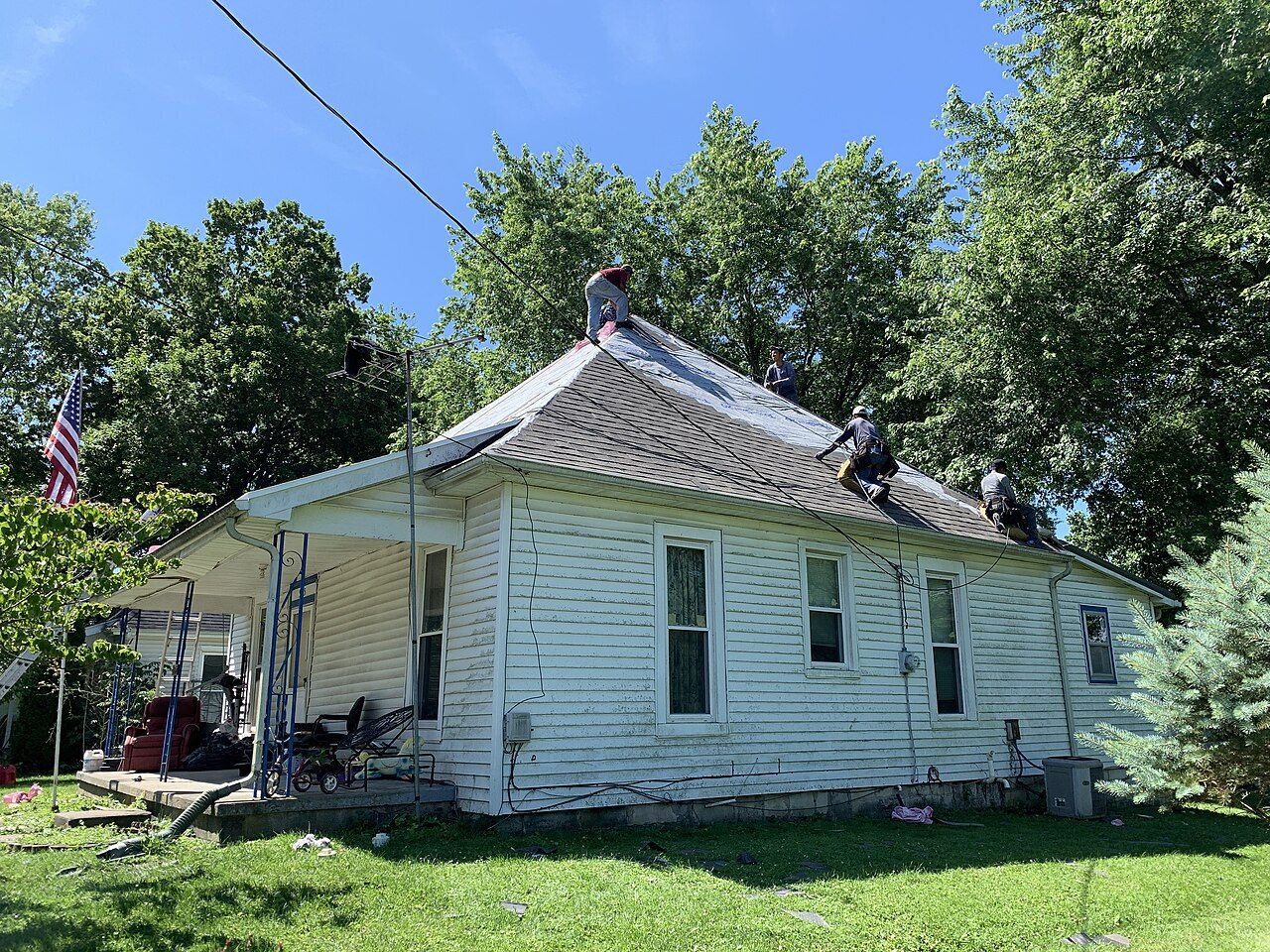
Roof replacement cost is the biggest single exterior expense most homeowners face, and the resale numbers are sobering: the 2025 Cost vs. Value report puts a national asphalt-shingle replacement at $31,871 and only $21,501 of that back at sale — 68 percent recovered. A standing-seam metal roof runs $51,865 and returns $25,972, just 50 percent. Neither pays for itself at closing. Both still protect everything underneath, which is the real reason to do the work. Here is how the numbers break down, why the percentage is lower than nearly every other exterior project, and when asphalt versus metal actually makes sense.
Roof Replacement Cost and ROI: The 2025 Benchmark
The Cost vs. Value report from Zonda and the Journal of Light Construction prices 28 defined projects across 119 US markets. For roofing it models tear-off and replacement of an existing roof, and the national results are:
- Asphalt shingles: $31,871 job cost, $21,501 resale value, 68 percent recouped.
- Standing-seam metal: $51,865 job cost, $25,972 resale value, 50 percent recouped.
Those are among the weakest percentages in the entire report — below the 113 percent of a minor kitchen remodel, the 95 percent of a wood deck, and the 76 percent of vinyl windows. The reason is not that roofs add no value; it is that they cost a lot and buyers treat a sound roof as an expectation rather than a feature. A house with a failing roof does not sell for much less because of the roof alone — buyers discount the whole property or walk away. Fixing it removes a blocker rather than adding a premium. That distinction explains why the project still ranks among the most common home investments despite the poor headline return. Our ROI comparison shows where roofs sit among the 28 projects.
What Drives the Price
Roof area is measured in “squares” — 100 square feet — and the modeled job is far larger than a simple ranch roof. The main cost variables are:
- Material: architectural asphalt shingles typically run $4 to $8 per square foot installed; basic three-tab less. Standing-seam metal runs $9 to $16 or more, with copper and slate higher still.
- Tear-off and disposal: removing one or two layers of old shingles adds $1 to $3 per square foot, plus dump fees.
- Roof complexity: steep pitches, multiple valleys and dormers, and two-story access add 15 to 35 percent through staging and labor.
- Deck and underlayment repairs: rotted sheathing discovered after tear-out is the classic change order, often $1,000 to $4,000 on an older home.
- Flashing, vents, and chimney work: these are separate line items and a common source of an unexpectedly high bid. Our chimney repair cost guide covers the masonry side of that junction.
- Region: the Northeast and West Coast run 15 to 25 percent above national averages; storm-prone markets add code-driven uplift requirements.
For a typical 2,000-square-foot home, installed totals range from roughly $8,000 to $30,000 depending on material and complexity, with most architectural-shingle jobs in the $11,000 to $18,000 band. Get three itemized bids that state the shingle brand and grade, number of layers torn off, underlayment specification, flashing scope, permit, and contingency for deck repair. A bid that omits teardown is not cheaper — it is incomplete.
Asphalt or Metal?
Asphalt wins on up-front cost and is the default for most suburban homes. It also reaches 68 percent cost recovery versus metal’s 50 percent in the national model, so if resale is the priority, asphalt is the safer financial choice. Metal wins on longevity — 40 to 70 years versus 20 to 30 for architectural shingles — on fire resistance in wildfire zones, on snow shedding in cold climates, and on energy performance with reflective coatings. The higher dollar resale value of a metal roof ($25,972 versus $21,501) does not offset its $20,000 higher cost in the modeled sale, but a homeowner staying fifteen years may value the skipped re-roofing cycle and lower maintenance far more than the percentage suggests.
In hail-prone regions, impact-rated shingles may be the better compromise, and some insurers offer premium discounts that shift the lifetime math. In historic districts, the material may be dictated by the streetscape. Compare any roof decision against the other exterior projects in our garage door and window replacement guides: the small replacements score far better on resale, but none of them stop a ceiling leak.
Repair or Replace?
A roof with a few damaged shingles, a failed vent boot, or a localized flashing problem can often be repaired for $200 to $1,500. Replacement becomes the right call when shingles are curling and losing granules across large areas, leaks appear in multiple places, the deck is sagging, or the roof is nearing the end of its expected life. An insurance claim after storm damage may cover some or all of the cost, but documentation and timing matter — photograph the damage before temporary repairs. If you are also addressing the building envelope elsewhere, coordinate the work: our deck addition and curb appeal guides cover projects that share the same crews and access equipment.
Timing and Contractor Selection
Schedule replacement for late spring through early fall when weather is predictable and crews are not booked solid after storm season. Emergency work in winter or after a major hail event costs more and gives you less choice of contractor. Verify that the roofer is licensed, insured, and — where required — certified by the shingle manufacturer, since a manufacturer certification is often what makes an extended warranty valid. Ask for a written scope that names the exact shingle, underlayment, flashing metal, number of layers to be removed, and who pays for deck repairs discovered mid-job. A crew that arrives without checking the deck is a crew that will bill you for surprises. Get the permit number in writing too: an unpermitted re-roof can complicate an insurance claim later.
The Bottom Line
Budget $11,000 to $18,000 for a typical architectural-shingle replacement on a 2,000-square-foot home, or $9 to $16 per square foot for standing-seam metal, and expect roughly 68 percent and 50 percent cost recovery at resale respectively. The return is low because a roof removes a buyer objection rather than adding a selling point. Choose the material for climate, lifespan, and your ownership horizon — then get three itemized bids and a contingency for what the tear-out reveals.